Our dedicated Memory Care neighborhood in Swampscott is designed around structure, familiarity, and dignity. Here’s how memory care differs from assisted living.
Families often ask us what really separates memory care from assisted living. Both provide support with daily living, but memory care is built from the ground up for people living with Alzheimer’s and other forms of dementia. The difference is in the design, the staff training, and the daily rhythm — all centered on structure, familiarity, and dignity.
A space designed to reduce confusion
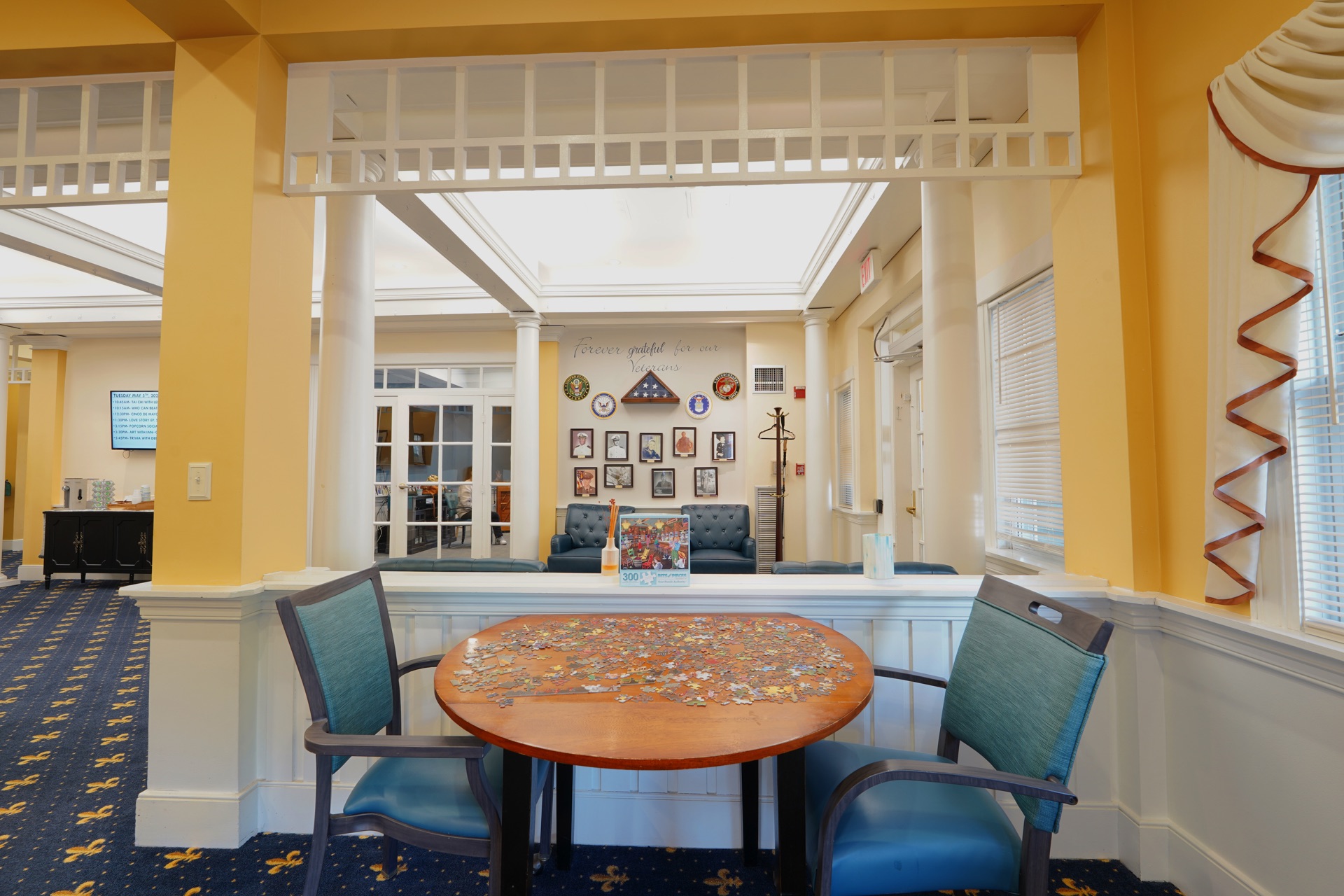
Our Memory Care neighborhood in Swampscott is purpose-built. Clear sightlines, consistent layouts, secure outdoor access, and gentle visual cues all help residents feel oriented and calm. A familiar environment lowers anxiety and supports independence for as long as possible.
Specially trained staff
Caring for someone with memory loss calls for a different skill set. Our team is trained in dementia-specific approaches — meeting residents where they are, communicating with patience, and redirecting with warmth rather than correction.
Structure that brings comfort
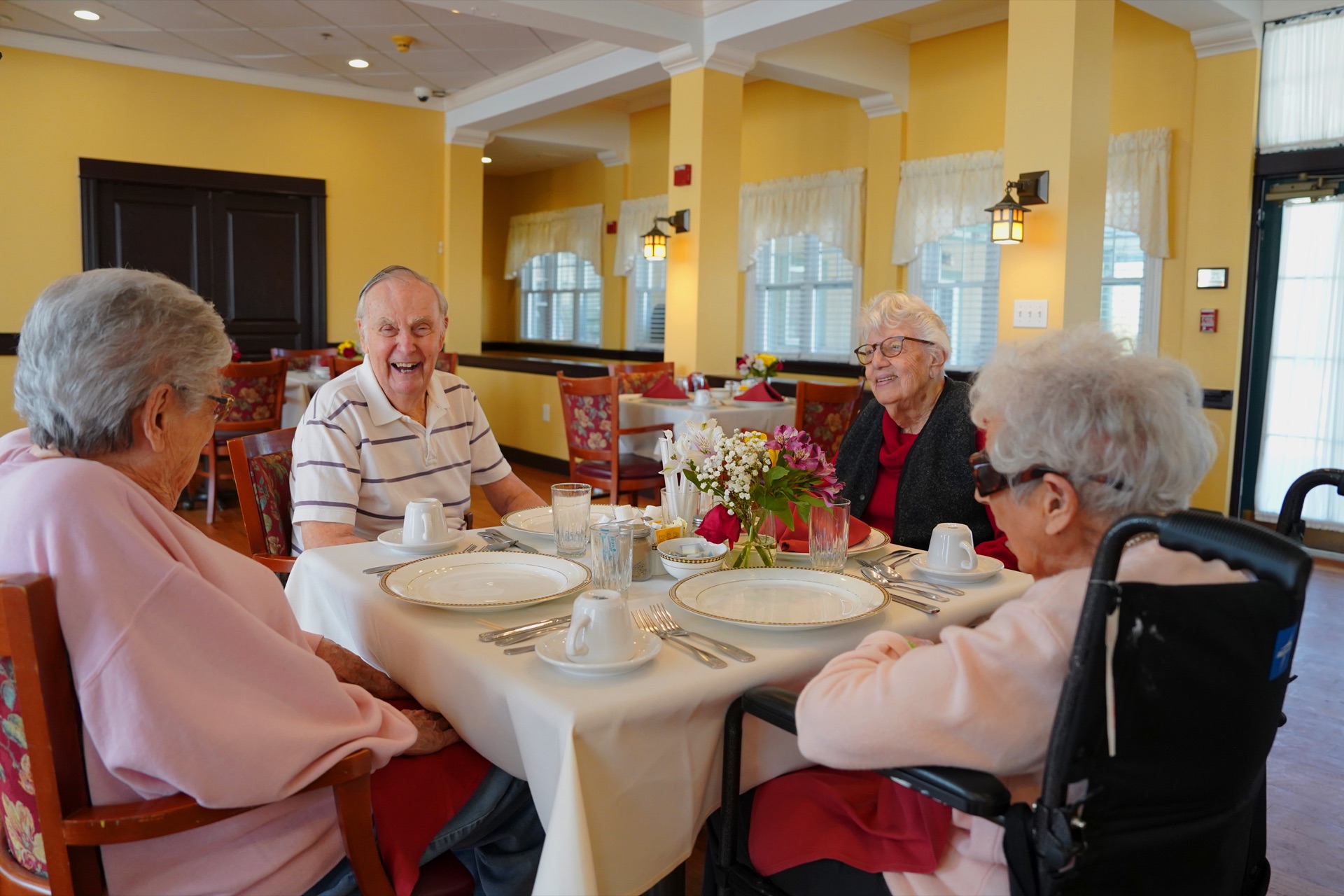
Predictable routines are reassuring. Meals, activities, and rest follow a steady rhythm, while programming like music, art, and reminiscence therapy taps into long-term memory and emotion.
- Music sessions that reconnect residents with cherished songs
- Sensory and reminiscence activities that spark positive memories
- Small-group engagement that fosters genuine connection
- Secure spaces that allow safe, independent movement
Memory care isn’t about doing things for people — it’s about creating a world where they can still do for themselves.
— The John Bertram Homes team
If your family is beginning to navigate a dementia diagnosis, you don’t have to do it alone. Reach out to learn how our Memory Care neighborhood can help.
Interested in life at John Bertram Homes?
Schedule a Tour